
A fantasy map makes a promise before the first chapter begins: there is more world here than you can see at once. It can also make a reader feel unexpectedly responsible. Must you remember every river? Should you study the legend before meeting the characters? For most first reads, the answer can be much simpler. Let the map invite you in, and let the story do the guiding.
Take a first look, then put it aside
Begin with the broad impression. Is the land divided by water, mountains or wide distances? Where does your eye go first? You are gathering a sense of possibility, not preparing for an exam. It is fine to return to the map only when a name in the story makes you curious.
This approach protects the pleasures of discovery. A map often includes places that do not matter immediately. Trying to assign every label a role can turn a welcoming page into a list of predictions. You do not need to decide which destination will become important before the characters do.
Notice relationships rather than memorizing labels
The most useful question is often not “What is this place called?” but “What is it near?” A settlement beside water suggests a different experience of travel from one separated by difficult ground. Even without calculating a distance, you can begin to picture why two places might feel connected or isolated.
Keep those impressions provisional. A map shows geography more readily than it shows knowledge, weather, loyalties or fear. Two characters can look at the same route and see very different risks. A good reading habit leaves space for the narrative to complicate the picture.
Resist treating the map as a prediction
It is tempting to assume that every striking location must become a destination. That assumption can pull attention away from the scene you are reading. Instead, make room for unused possibility. A named place can help a world feel larger than one person’s immediate journey, whether or not the story takes you there.
If you like making notes, record questions rather than forecasts. “Why does this coastline catch my eye?” keeps curiosity open. “The characters will certainly go here” closes it too soon. The difference is small, but it can change how freely you experience the book.
Use the map after a difficult transition
A change of viewpoint or a sudden journey is a natural moment to glance back. Locate what you can, orient yourself and return to the prose. If the map does not settle every detail, that is not necessarily a problem. Stories can make a place meaningful through its people and atmosphere before its exact position matters.
Try it with the map of Alba
The map of Alba is a companion to Alpin Legacy. Open the full-size version when you want a closer look. It represents the novel’s world, rather than a modern travel map or an archaeological reconstruction.
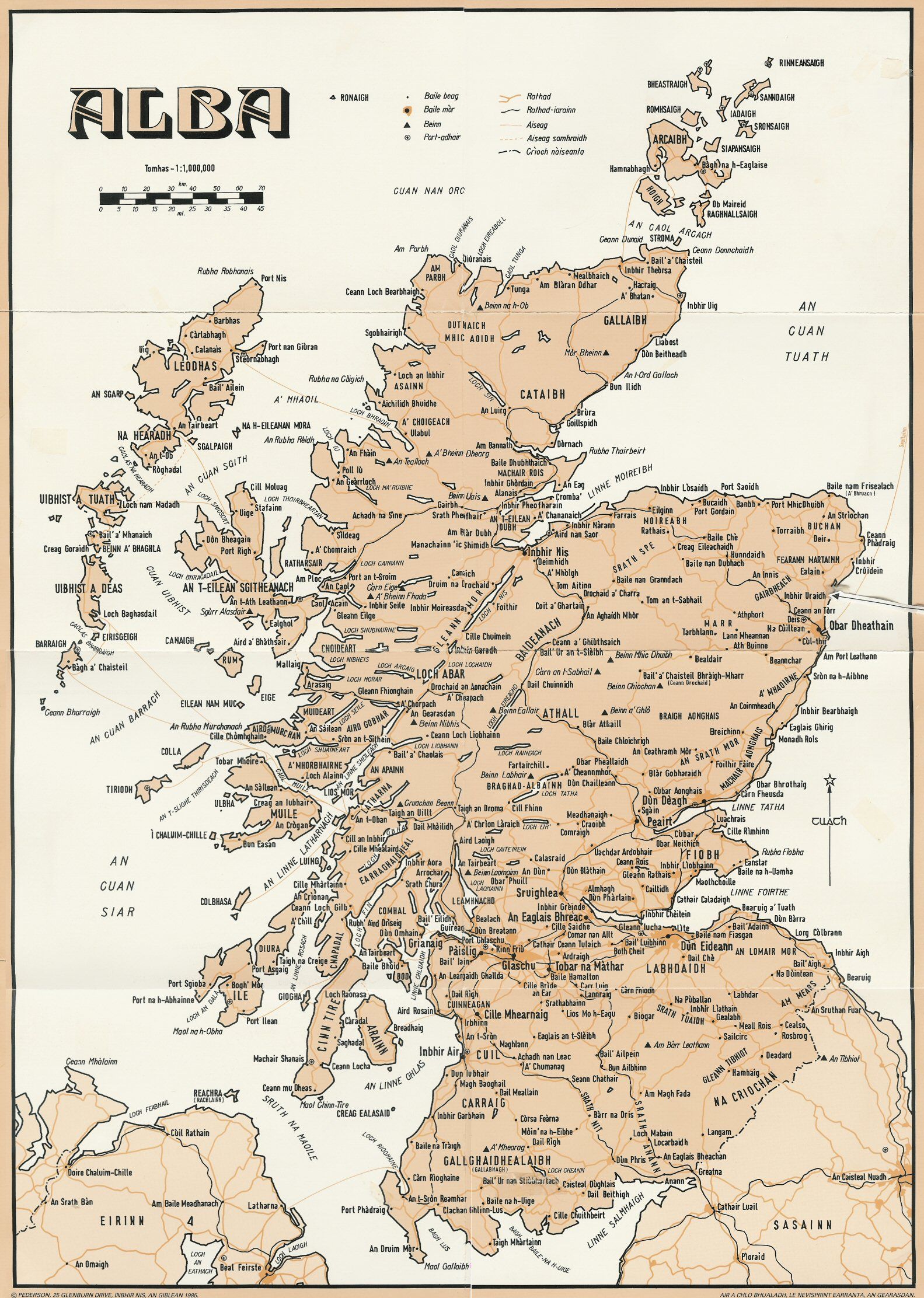
Before your first read, choose one feature that interests you and leave it there. Afterward, revisit the same feature. Has your attention changed because of a character, a choice or a new feeling about the landscape? That second look can be more rewarding than memorizing the whole map at the start.
Explore Alpin Legacy, the first First Wands novel by Luke Ocean, or visit the World & Journal for maps and reading companions.